Run One Command.
Ship a Sprint.
Production-grade Trello sprint board in under 30 seconds. Idempotent. Repeatable. Version-controlled.
// the problem
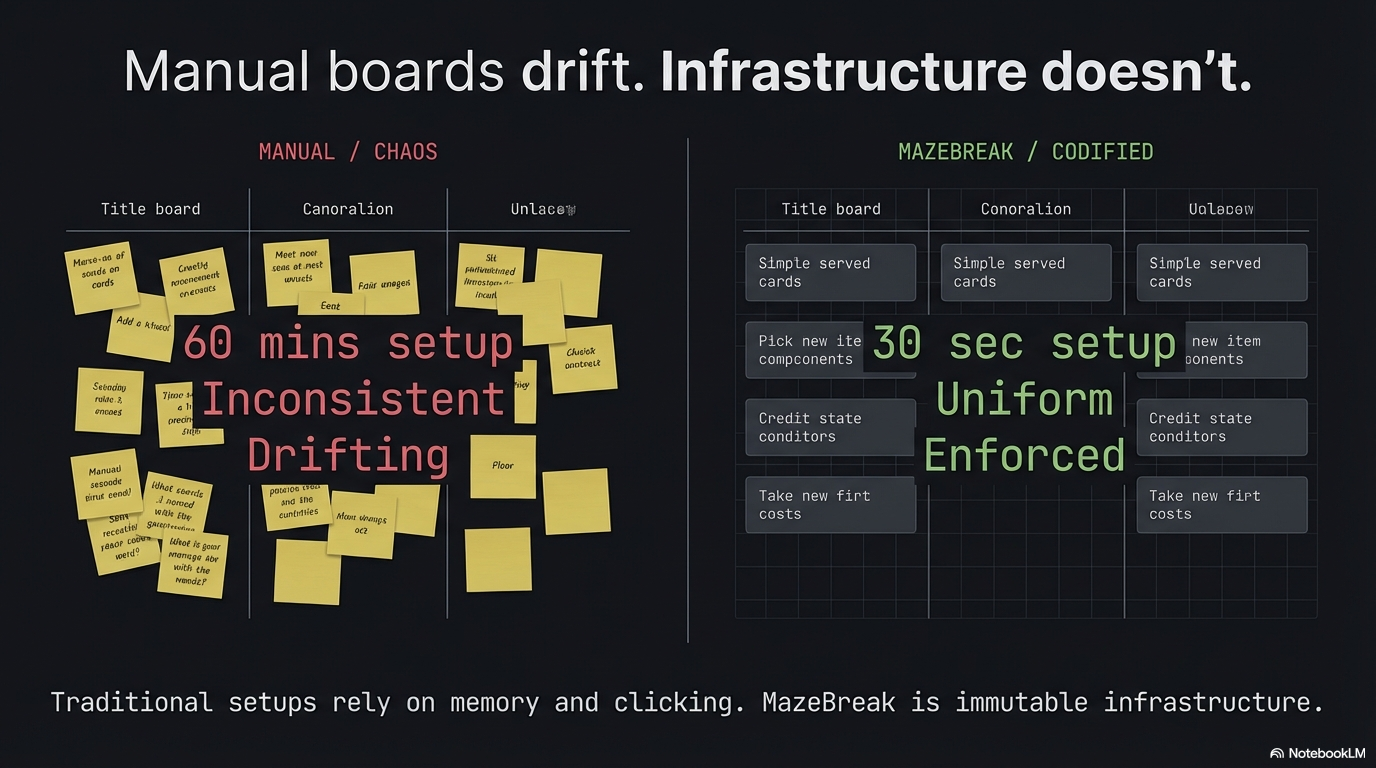
Manual boards drift.
Infrastructure doesn't.
Traditional Setup
- × 45-60 minutes clicking around Trello
- × Inconsistent card quality across the board
- × Dependencies live in someone's head
- × "Done" means different things to everyone
- × New team members start lost
- × Board can't be replicated or version-controlled
- × Scope creep sneaks in unchecked
MazeBreak Trello
- ✓ 30 seconds. One command.
- ✓ Every card has identical structure
- ✓ Dependencies encoded in titles and descriptions
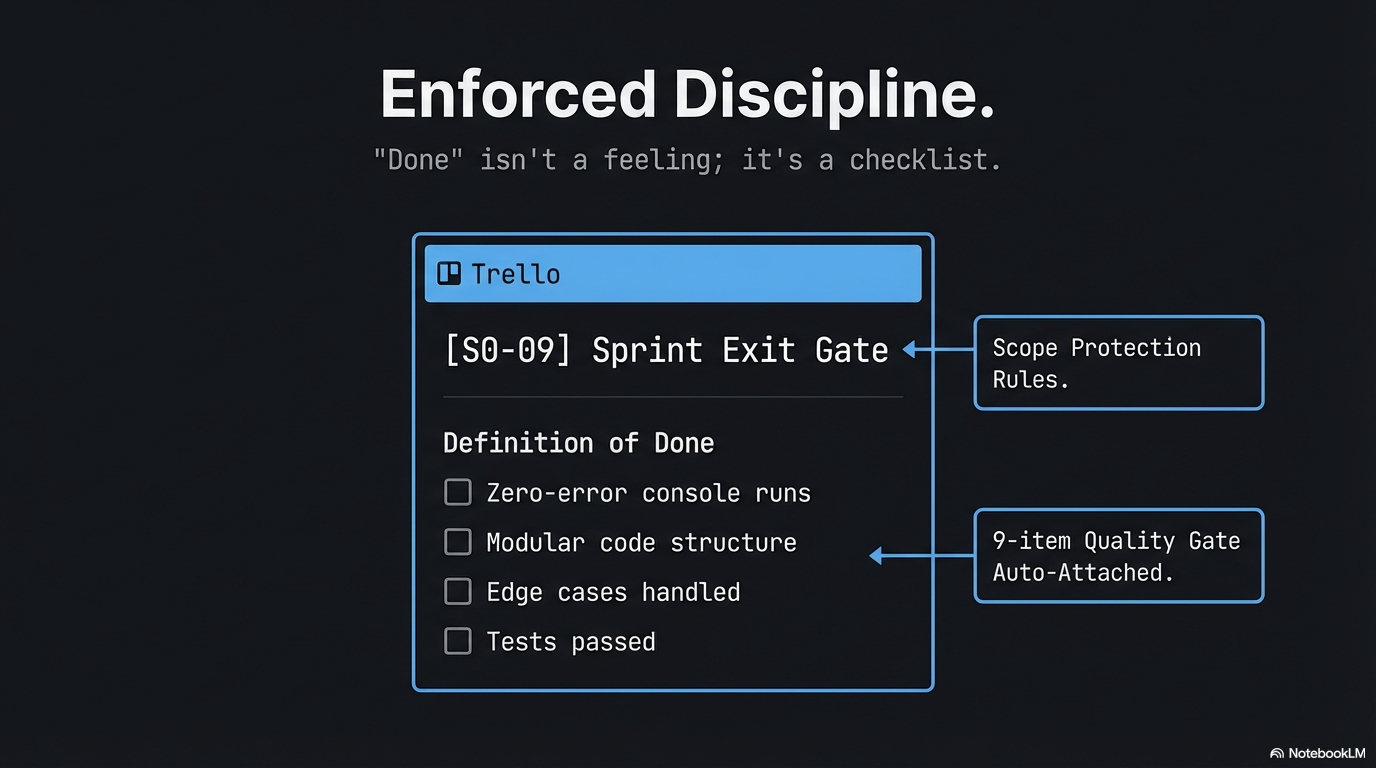
- ✓ 9-item Definition of Done on every card
- ✓ 4 onboarding instruction cards built in
- ✓ Re-run the script. Identical board.
- ✓ Gate Rules card + Exit Gate enforce discipline
// the system
Your Sprint. Encoded.
Enforced. Repeatable.
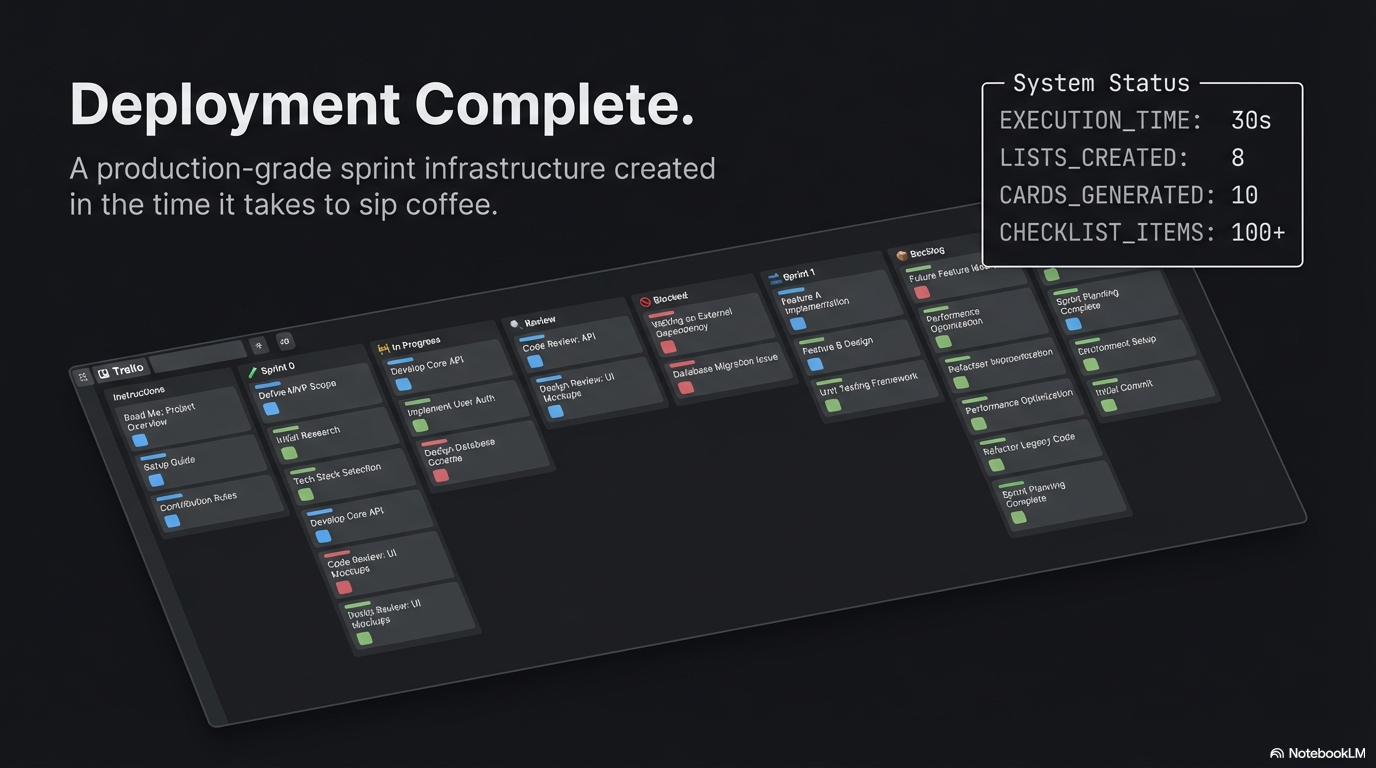
Every card ships with execution checklists, acceptance tests, a global Definition of Done, developer notes, and dependency tracking. No card is a second-class citizen.
// features → outcomes
Not just features.
Enforced outcomes.
Idempotent Execution
Run it once. Run it twice. Run it after someone manually edits the board. Find-or-create for every resource. No duplicates. No drift. No cleanup.
safe to re-run — alwaysDependency-Encoded Cards
Every card title carries a [S0-##] prefix. Descriptions list prerequisites. An ASCII dependency tree lives on the board. Your next task is always obvious.
[S0-00] → [S0-01] → [S0-02] → ...Definition of Done on Every Card
9-item quality checklist auto-attached to every single card. Zero-error runs, server authority, code modularity, edge cases, performance, and test documentation.
"done" means done. not "basically done."Sprint Exit Gate
A dedicated ship/no-ship card with 8 gate checks. The sprint doesn't end until responsiveness, readability, feedback, stability, and fairness all pass.
no soft exits. no "good enough."Version-Controlled Board Spec
Your entire sprint board structure lives in a single JS file in Git. Change a card, add a checklist item, adjust a label — commit, push, re-run. Full history. Full rollback. Full code review on board changes. This is infrastructure as code, not a template.
git commit → git push → node trelloSetup.js// see it in action
See It Build a Sprint
in 30 Seconds
// before & after
Stop Clicking.
Start Shipping.
| Traditional Setup | MazeBreak Trello |
|---|---|
| 45-60 min clicking around Trello | 30 seconds, one command |
| Inconsistent card quality | Every card — identical structure |
| Dependencies in someone's head | Encoded in titles + descriptions |
| "Done" means different things | 9-item DoD on every card |
| New team members start lost | 4 onboarding cards built in |
| Board can't be replicated | Re-run the script. Identical board. |
| Manual edits break structure | Idempotent — re-run fixes drift |
| Scope creep sneaks in unchecked | Gate Rules + Exit Gate enforce discipline |
Built for Serious Teams
Precision
Every card, checklist, and label is placed by API call — not by hand. No human inconsistency. No missed items. No drift.
Discipline
Gate rules lock scope. Exit gates enforce quality. Dependencies enforce order. The board doesn't let you cut corners.
Repeatability
Tear it down. Re-run. Identical board. New sprint? New project? Same infrastructure. Version-controlled and auditable.
Stop Setting Up Boards.
Start Shipping Sprints.
Not a template. A system.